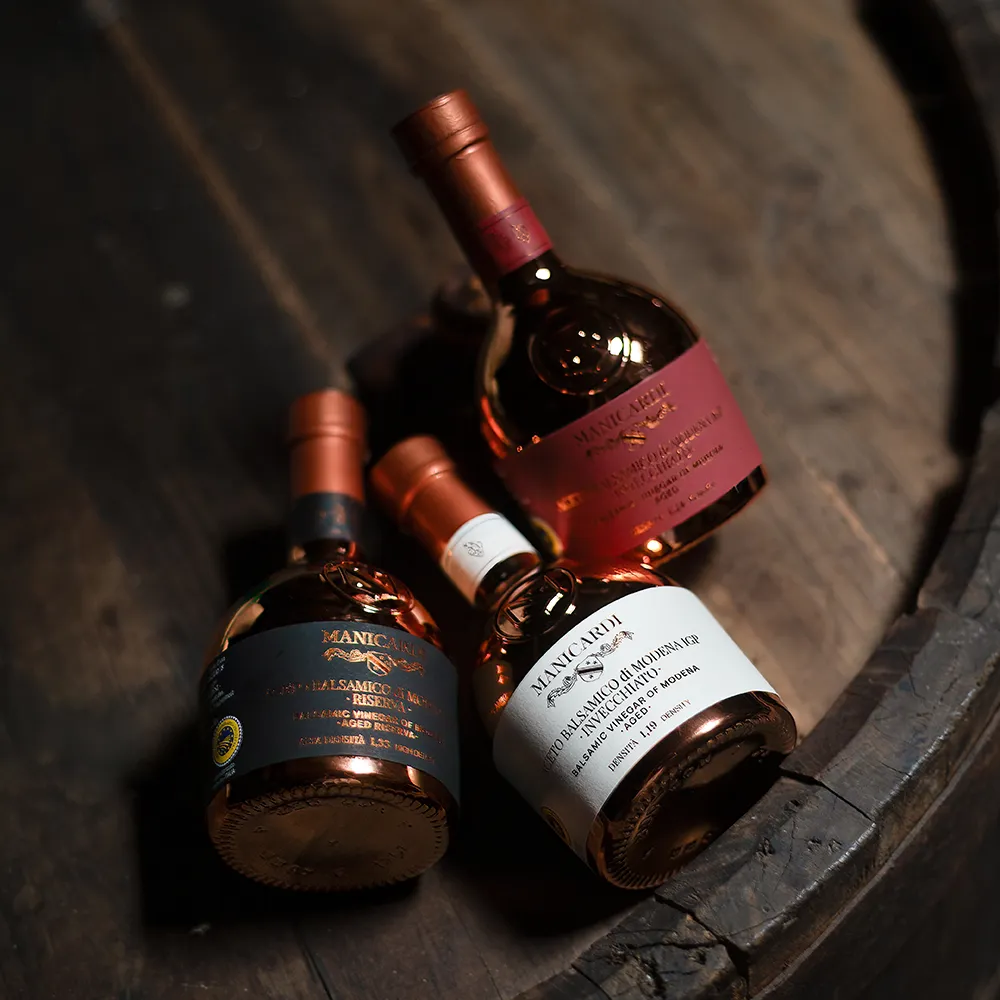
Balsamic Vinegars
Understanding Balsamic: PDO, PGI, Condiments and Creams
When faced with a bottle of balsamic vinegar, it may seem that the difference is primarily a matter of price, density, or years of ageing. In reality, behind apparently similar products lie very different ingredients, production methods, and uses.
For us at Manicardi, these differences are part of our daily work in the vinegar cellar. Understanding them helps above all in choosing the most suitable balsamic for what we wish to serve.
Traditional PDO: cooked must and time
Traditional Balsamic Vinegar of Modena PDO is made from a single ingredient: cooked grape must.
The process continues through fermentation, acetification, maturation, and a long ageing period in batteries of small wooden barrels of progressively smaller sizes. Natural evaporation concentrates the product, while the passage through different woods accompanies its aromatic evolution.
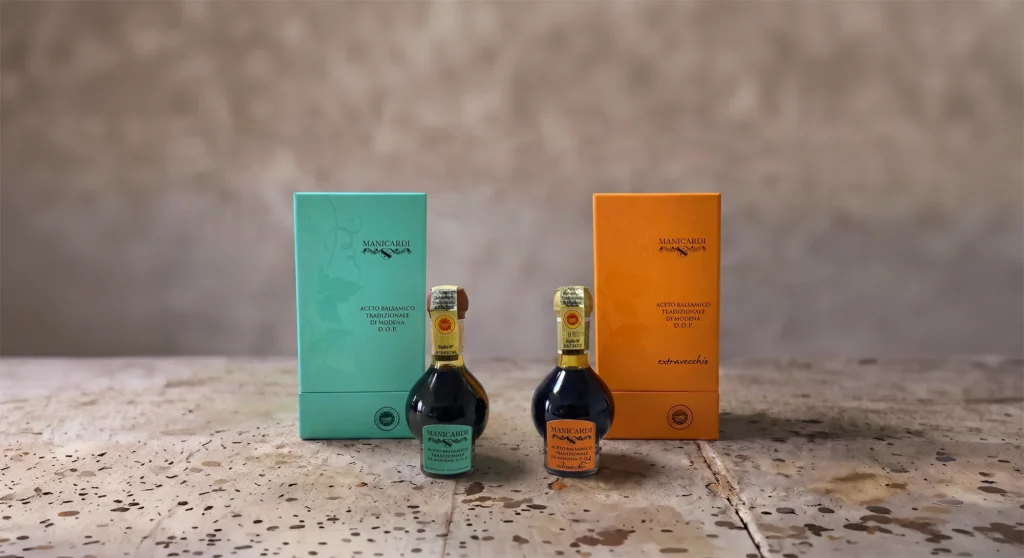
There are two classifications: Affinato, with at least 12 years of ageing, and Extravecchio, with at least 25.
It is an intense and naturally dense balsamic, to be used sparingly due to its preciousness. A few drops are sufficient on Parmigiano Reggiano, risottos, meats, strawberries, or ice cream. It also lends itself to tasting alone, precisely to appreciate its balance between sweetness and acidity.
Balsamic Vinegar of Modena PGI: many possible interpretations
Balsamic Vinegar of Modena PGI follows a different path. It is produced using cooked or concentrated grape must together with wine vinegar. At Manicardi, we work with cooked must and selected wine vinegars.
However, within the same designation, very different products can be created. The proportions of ingredients, the maturation period, the woods, the blends, and the density all vary.
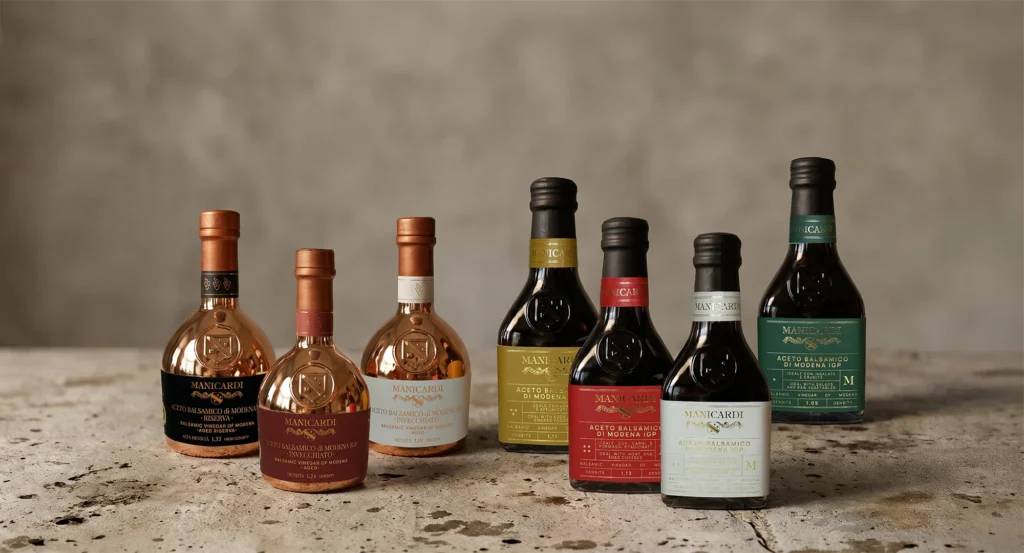
A young and more fluid PGI generally offers a fresh and lively profile, suitable for salads, vegetables, or marinades. As concentration and maturation increase, the taste becomes rounder, and the balsamic also finds its place on aged cheeses, risottos, meats, and fruit.
When the designation “Invecchiato” appears, the product has spent at least three years in wood; the designation “Riserva” indicates at least five years. Time modifies the aromatic profile and creates a more integrated relationship between sweetness and acidity.
Density also helps in understanding what to expect from the bottle: a higher value generally corresponds to a richer and more concentrated consistency. However, it is not, on its own, a measure of quality.
And Balsamic Condiments?
Balsamic Condiments belong to a different category and do not follow PGI regulations. This allows for greater freedom in the search for balance between sweetness, acidity, and consistency.
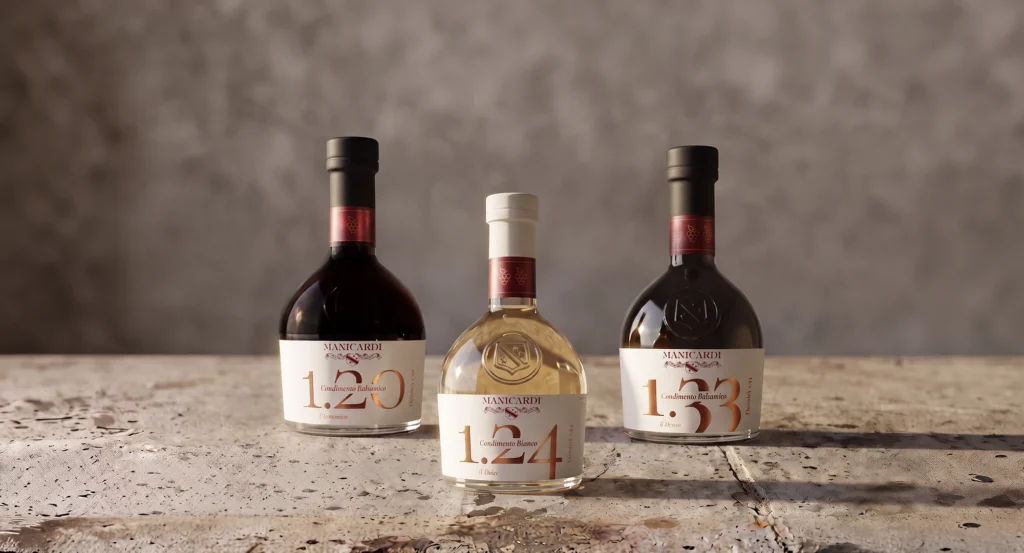
They can combine, for example, cooked must and Balsamic Vinegar of Modena PGI, creating smoother and often denser products.
It is precisely this characteristic that makes them interesting, especially as a finish: on cheeses, meat, vegetables, risotto, or fruit.
Creams: when consistency also matters
Creams have yet another function. The presence of sugars and thickeners creates the typical creamy consistency, designed to stay on the plate and allow for precise use.
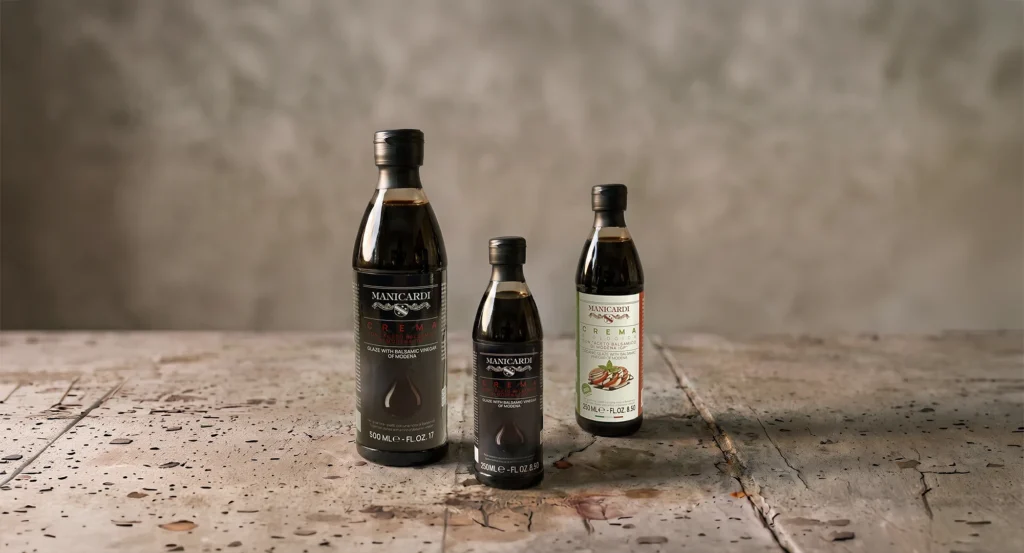
They are therefore particularly practical for completing salads, vegetables, meat, cheeses, pizza, and desserts, or for creating decorations.
PDO, PGI, Condiments, and Creams are products with different characteristics and purposes. Rather than asking which balsamic is the best, it is worth starting with a much simpler question: what do we want to cook today?
Back to the Archive